Types of Qigong
Types of Qigong: A Beginner's Map of the Main Styles
There are hundreds of qigong styles, but most of them belong to a few broad families: health qigong, martial qigong and spiritual qigong. If you are just starting out, a simple health-focused style is usually the easiest way in. This guide walks you through the main families, the best-known styles, and how to choose the one that suits you.
What all qigong styles have in common
The word qigong combines qi, often translated as “life energy”, and gong, meaning “skill gained through practice”. So qigong simply means cultivating your energy through regular practice.
However different they look, almost all styles work with the same three elements:
- The body: a relaxed posture, and often slow, flowing movement.
- The breath: calm, natural breathing, sometimes guided in a particular way.
- The mind: gentle, focused attention on the body, the breath or an image.
What changes from style to style is the balance between these three, and the purpose behind the practice. If you’d like a wider introduction first, read Why Qigong?
The three families of qigong
Teachers group qigong styles in different ways, but the most common grouping is by purpose.
1. Health and medical qigong
Practised to stay well, recover energy and support the body’s own ability to heal. This is the largest family and where most beginners start. It includes the classic routines practised in parks across China, as well as modern systems such as Zhineng Qigong and Spring Forest Qigong.

2. Martial qigong
Practised alongside martial arts to build strength, balance and internal power. Tai chi grew out of this tradition, which is why tai chi and qigong look so similar. Some martial styles include demanding “hard” training that isn’t meant for beginners.

3. Spiritual qigong
Practised in Daoist and Buddhist traditions as a path of meditation and self-cultivation. These styles often place more weight on stillness and inner awareness than on movement.
In practice the families overlap. Many health styles also deepen awareness, and many spiritual styles also support health.
Moving and still qigong
Qigong can also be divided by how you practise.
Moving qigong uses slow, repeated movements coordinated with breathing and attention. It is the kind most people picture, and it is easy to follow along with a teacher or video.
Still qigong is practised standing, sitting or lying down without visible movement. It is close to meditation, and the work happens through posture, breath and attention.
Most styles combine both. A typical session might begin with movement to relax the body, then end with a few minutes of stillness.
Well-known qigong styles at a glance
The first four styles below are classic routines. In 2003 they were the first sets standardised by China’s sports authorities as “Health Qigong”, which is why you’ll find them taught in the same way around the world. The last two are modern systems with their own teachers and communities.
| Style | Roots | What a session looks like | Good for |
|---|---|---|---|
| Baduanjin (Eight Brocades) | Classic routine, centuries old | Eight standing movements, about 10–15 minutes | A short daily routine that is easy to memorise |
| Yijinjing (Muscle-Tendon Changing) | Traditionally linked to the Shaolin Temple | Stretching and strengthening movements held with focus | Flexibility and strength |
| Liuzijue (Six Healing Sounds) | Classic breathing practice | Gentle movements with six different exhaled sounds | People drawn to breathwork |
| Wu Qin Xi (Five Animals) | Credited to the physician Hua Tuo, about 1,800 years ago | Movements imitating the tiger, deer, bear, monkey and crane | A playful, varied practice |
| Spring Forest Qigong | Modern system by Master Chunyi Lin, taught in the US since 1995 | Simple movement, breathing and guided meditation | Self-healing practice with home-study programs |
| Zhineng Qigong | Modern system by Dr. Pang Ming, developed in the 1980s | Simple repeated movements, practised alone or in a group, with clear use of the mind | Self-healing and practising together as a community |
None of these is “the best”. Each has helped many people. What matters more is choosing one you enjoy enough to practise regularly.
Where Zhineng Qigong fits
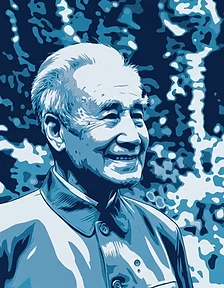
Zhineng Qigong is a health qigong developed by Dr. Pang Ming, a Chinese physician trained in both Western and traditional Chinese medicine. He drew on many older qigong traditions and combined them into one system in the 1980s. In 1988 he opened the Huaxia Zhineng Qigong Center, which became known as the “medicine-less hospital”. In the West, Zhineng Qigong is also known as Wisdom Healing Qigong or Chilel.
For a beginner, three things make it stand out:
- The movements are simple and repeated. The foundation method, “Lift Qi Up, Pour Qi Down”, can be followed from the very first session.
- The qi field plays an important role. Practitioners connect to it with the mind, so you can practise on your own and still be supported by the shared field.
- The mind plays an active role. Attention and intention are part of the method, not an add-on.
It became one of the most widely practised qigong styles in China. In the late 1990s, China’s national sports administration compared a number of medical qigong styles and rated Zhineng Qigong the most effective for health, according to Zhineng teachers and organisations. Today, teachers work in many countries. Read more in Why Zhineng Qigong? and About Dr. Pang Ming.
How to choose your first style
Ask yourself a few simple questions:
- Do you want gentle movement or stillness? If you find sitting still hard, start with a moving style.
- Do you prefer a fixed routine or a guided session? A set routine like Baduanjin suits people who like to practise alone. A guided style suits people who like a teacher’s voice.
- Do you want support while you practise? Zhineng Qigong teaches that you can connect with a shared qi field, whether you practise alone or in a live session.
- Online or local? Check what’s available near you, and what you could do from home.
- How much time do you have? Ten to twenty minutes a day is enough to begin.
Most importantly, try before you decide. One live session tells you more than any article.
Try Zhineng Qigong for free
The Qigong Starter Kit gives you a live 1.5-hour online group session for complete beginners, guided by certified teacher Britta Stalling. Afterwards you receive two training videos with Master Yuantong Liu, a guided La Qi audio meditation and an e-book. It’s free, and no experience is needed.
Questions & Answers
Frequently asked questions
Which type of qigong is best for beginners?
A simple health qigong with short, repeated movements is the easiest start. Baduanjin and Zhineng Qigong are both popular first choices. The best one is the style you enjoy enough to practise regularly.
Is tai chi a type of qigong?
Tai chi developed as a martial art, but it shares qigong's slow movement, breathing and focus. Many teachers describe tai chi practised for health as one form of qigong. Tai chi forms are usually longer and take more time to learn.
How many types of qigong are there?
No one has an exact count, because many teachers developed their own forms. Most fall into three families: health, martial and spiritual qigong.
Can I learn qigong online?
Yes. Simple health styles are well suited to online learning, especially with a live teacher who can guide you. Group sessions online can also give you the support of practising with others.
Do I need to be fit or flexible?
No. Qigong movements are gentle and can be adapted, and many can be done seated. If you have a health condition, check with your doctor first, and practise qigong alongside your medical care, not instead of it.
Reviewed by Britta Stalling, certified Zhineng Qigong teacher. This page is for general information and is not medical advice.